
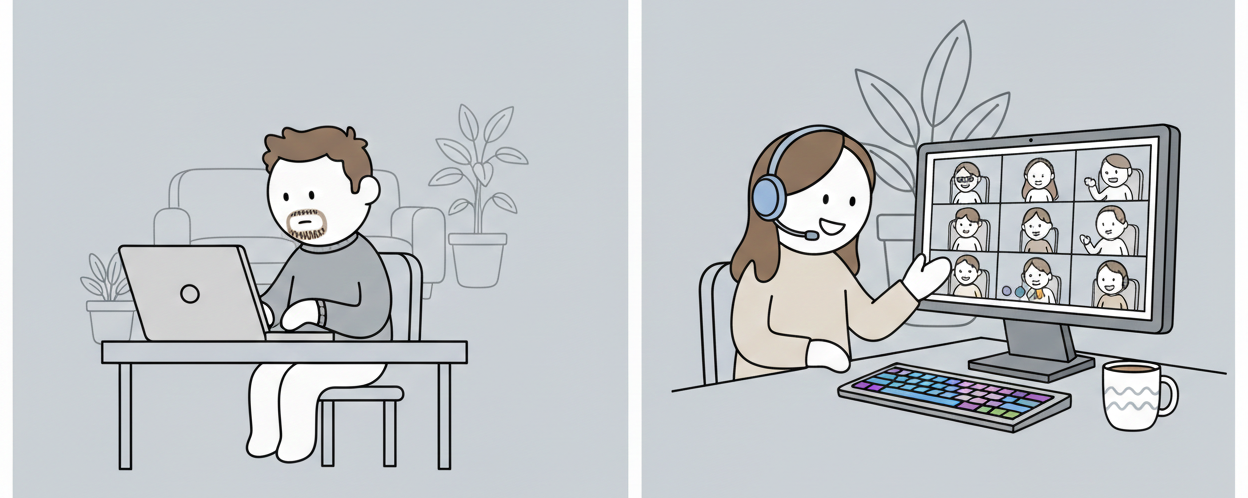

For decades, the traditional office was built for the loud. If you were the type who found “forced” small talk draining or felt overwhelmed by the constant noise of an open-plan floor, you were often at a distinct disadvantage. Success wasn’t always about your output; it was frequently about your visibility and your ability to “perform” in real-time social settings. But the shift to remote work has flipped the script. The “loudest voice” in the room is being replaced by the most thoughtful one, turning what was once a source of daily stress into a massive career advantage.
This shift is driven by a move toward asynchronous communication. In a physical office, being put on the spot is the norm. If you didn’t have an instant, witty answer in a meeting, colleagues might have perceived your silence as a lack of preparation—or worse, a lack of competence. Remote work introduces the “power of the pause.” Whether it’s via Slack or project comments, you finally have the space to process information thoroughly. In the remote world, a precisely written, high-impact reply carries more weight than ten minutes of fast-talking fluff.
In a physical office, “performance” is often about visibility and social navigation. For those with social anxiety, this “invisible tax” is exhausting and can overshadow actual talent. Remote work shifts the focus to your digital footprint—your code, designs, and strategy. When the social noise is removed, your output becomes your primary advocate. In a remote-first culture, your results finally take center stage.
Research suggests that introverts naturally thrive in “Deep Work”—the ability to focus intensely on complex tasks without overstimulation. While the open office was an enemy of concentration, the remote environment is its sanctuary. This creates a “Deep Work Dividend.” While others might spend their day chasing “productivity snacks”—those quick, shallow tasks that feel busy but accomplish little—the remote introvert can disappear to solve difficult problems. In a results-driven economy, the ability to focus is a rare, high-value skill.
Remote work doesn’t mean zero interaction; it means intentional interaction. For someone drained by constant face-to-face contact, the deliberate pace of typed feedback or scheduled one-on-ones is far more manageable. It allows you to build professional relationships based on shared goals rather than physical proximity. You can be a “people person” on your own schedule, preserving your social energy for high-impact moments rather than wasting it on a thousand unplanned interruptions.
If you thrive on the energy of a busy office, don’t worry—you aren’t “locked out” of remote success. For extroverts, the challenge is shifting that social energy from proximity to proactivity. Instead of relying on accidental water-cooler chats, you become the person who organizes the virtual “hangouts” or the one who drives team morale through high-energy video check-ins. You have a unique ability to bridge the gap between isolated teammates. Your “social battery” is a powerful tool for community building in a digital space.
For extroverts, the “proximity” of a physical office acts as a passive social charger. Remote work requires a shift to “proactive” connection. To thrive, you must become the team’s social architect. Action this by being the first to celebrate a win in Slack, initiating “coffee chats” without a work agenda, or using voice notes to add warmth to text-heavy projects. Your ability to inject energy and human connection into a digital interface is a high-value leadership trait. You aren’t just “talking”—you’re preventing team isolation.
The remote revolution isn’t just a change in location; it’s a change in how we measure value. Whether you’ve spent your career “masking” your true nature or overperforming as someone you’re not to fit an office mold, those days are over. You no longer need to be the loudest person in the room to be the most valuable. By leaning into your natural strengths—whether that’s the “Deep Work” of an introvert or the “Social Proactivity” of an extrovert—you aren’t just participating in the remote economy; you’re leading it.