
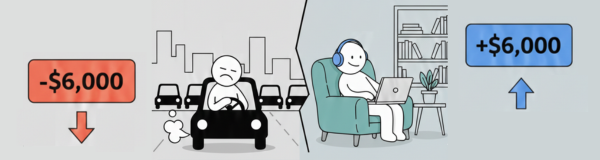

Your salary doesn’t account for the “Commute Tax.” Research from FlexJobs and Global Workplace Analytics shows that the average remote worker saves between $6,000 and $12,000 per year. Between gas, vehicle wear, and $15 daily lunches, your take-home pay is significantly lower than it looks on paper. Remote work isn’t just a lifestyle choice; it’s an immediate, tax-free raise of over $5,000 that goes straight back into your pocket.
Money can be replaced, but time cannot. The average American spends nearly an hour a day commuting. That adds up to roughly 250 hours a year—over ten full days—stuck in transit. This “Time Poverty” is time stolen from sleep, fitness, or family. Remote work reclaims those ten days, giving you back the freedom to actually use your time instead of just “spending” it on the road.
A heavy commute is a mental drain before your workday even begins. Navigating traffic or crowded trains consumes cognitive energy that should be reserved for high-impact tasks. By removing the commute, you arrive at your desk with your full focus intact. It’s the difference between starting your workday at 100% capacity versus starting at 70% because you’re already drained by the trip.
The cost of an office job extends to your closet. Professional wardrobes, dry cleaning, and the pressure to maintain a certain “look” create a constant financial leak. When you work remotely, the “image tax” disappears. While you still need to look professional for video calls, the daily overhead of maintaining a full corporate wardrobe is replaced by a simpler, more cost-effective reality.
Commuting isn’t just a drain on your wallet; it’s a tax on your body. Long commutes are linked to higher blood pressure, increased stress, and chronic back pain. Furthermore, that hour on the road is time taken directly from the gym or a morning walk. Remote workers are significantly more likely to engage in regular wellness activities, trading “car time” for “health time.” The physical cost of “going to work” can often lead to medical expenses that far outweigh any fuel bill.
When you arrive home after a grueling commute, you rarely have the mental energy to be frugal. This leads to the “Convenience Fee”—the extra money spent on food delivery and surge-priced services because you’re too exhausted to cook or run errands. Remote workers don’t just save on lunch; they save on the evening “exhaustion spending” that happens when you’re too drained to make cost-effective choices.
When you add it all up—the $5,000+ in cash, the 250 hours of reclaimed time, the health benefits, and the elimination of “exhaustion spending”—returning to the office is essentially a pay cut you never agreed to. Choosing remote work is a financial and emotional investment in yourself. The “Remote Raise” is real, and it’s waiting for you to claim it.